

Acoustic Profiling
Acoustic Requirements in Defense Electronics Cooling
Fan noise in defense electronics is not only an operator-comfort issue. In cockpits, combat vehicle interiors, shipboard consoles, and control rooms, sustained fan noise can increase operator fatigue and mask warning signals. In sensor-adjacent installations, tonal components may also affect acoustic baselines.
The dominant tonal component in many axial fans is blade-passing frequency (BPF), generated by the number of blades multiplied by rotational speed in revolutions per second. BPF tones are easier to control during fan design than after the fan has been installed inside a platform.
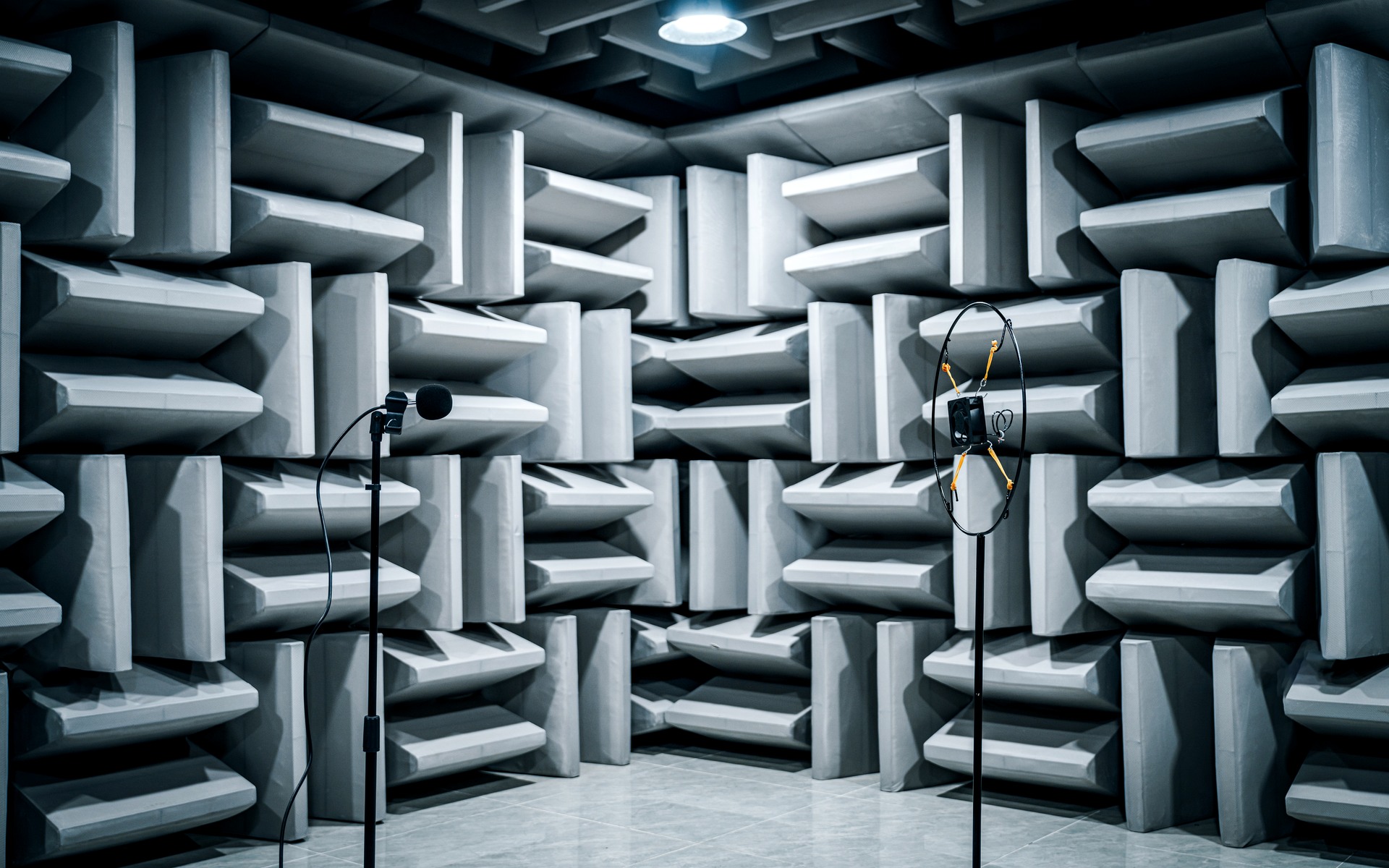
Semi-Anechoic Test Environment
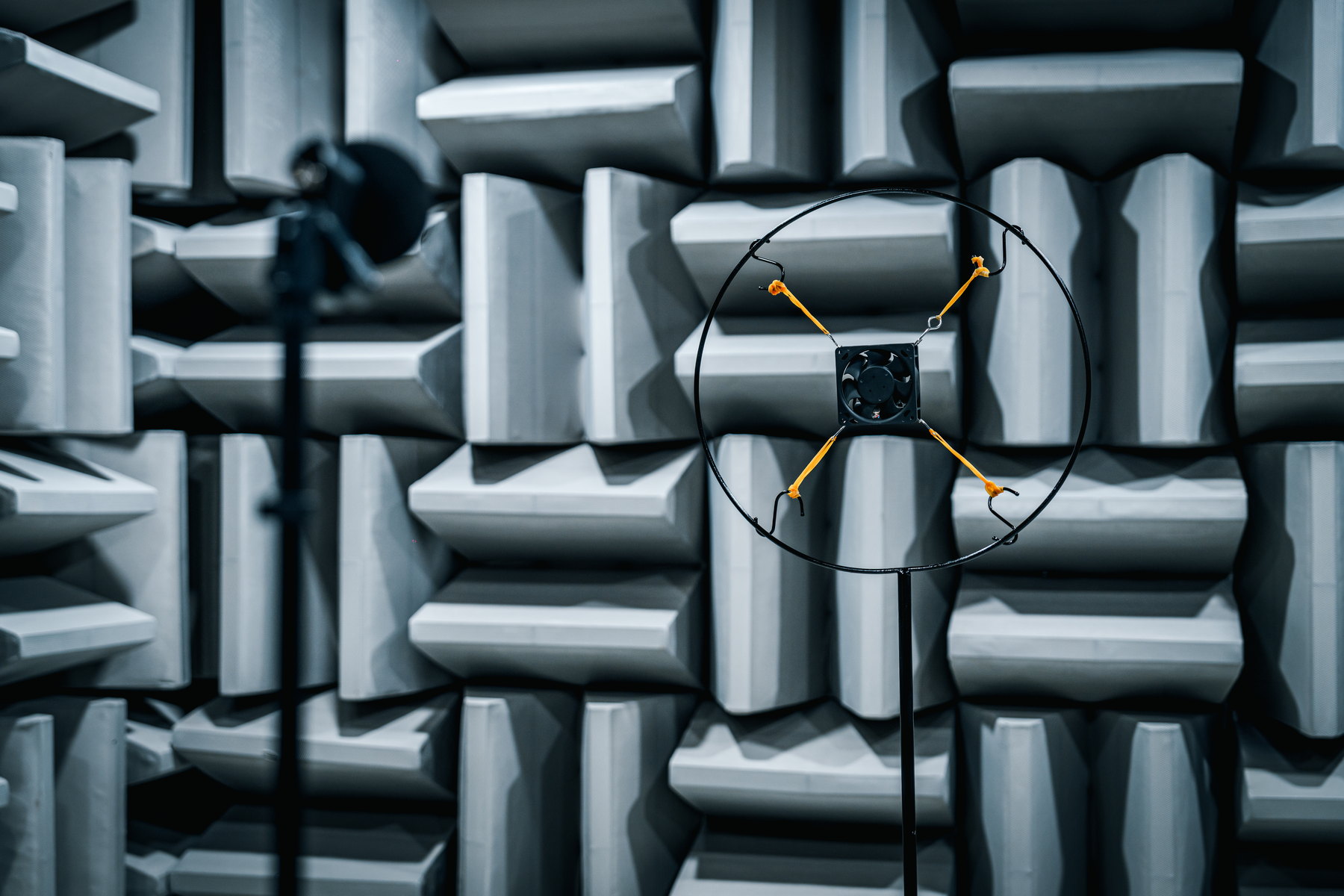
Acoustic profiling is conducted in a semi-anechoic environment that suppresses reflected sound and helps isolate the fan's direct acoustic output from room effects. Measurement planning can reference ISO 3744 sound-power methodology when a program requires standardized acoustic data.
What Acoustic Testing Identifies
Acoustic testing is most useful when each measurement is tied to the fan's operating point, voltage condition, mounting state, and airflow restriction.
Overall sound pressure level in dB(A) at defined operating conditions.
Blade-passing frequency tones and harmonic content.
RPM-dependent noise behavior that informs PWM speed-control strategy.
Mechanical noise from bearing vibration, housing resonance, or residual imbalance.
A free-air acoustic reading does not always predict installed noise inside a compact electronics enclosure. Installed acoustic review should consider nearby panels, ducts, guards, and enclosure impedance.
Engineering Consultation & Quote Request
Technical Consultation & RFQ Whether you require a standard MIL-SPEC cooling component or a fully integrated structural thermal control system, our engineering team is ready to assist. Submit your technical requirements, and our specialists will provide a preliminary assessment and thermal integration strategy within 24 hours.