


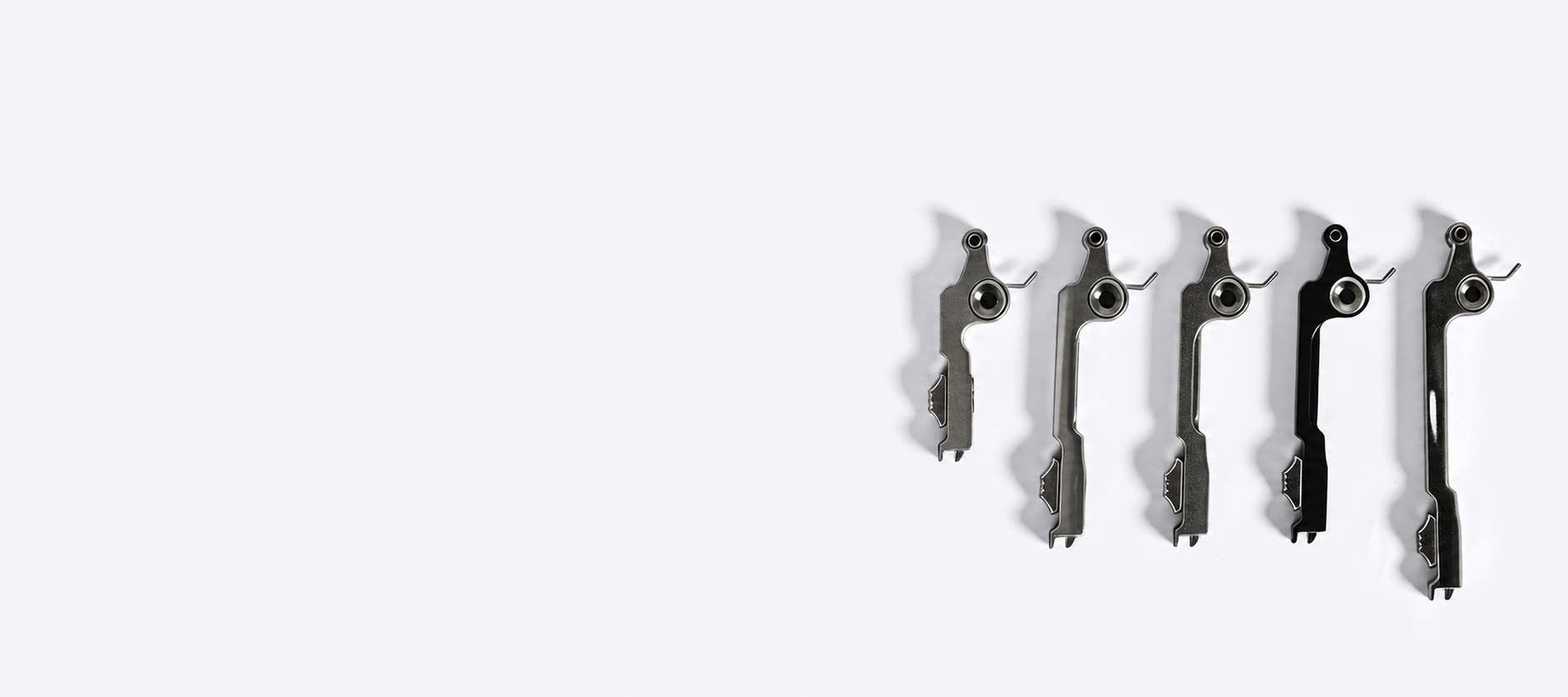
Precision Wedge Locks for Conduction-Cooled Chassis
Mechanical Retention and Thermal Interface Hardware for VPX, CPCI, and ATR Modules
Perseus wedge locks, also known as card retainers, provide the mechanical-to-thermal interface for conduction-cooled VPX, CPCI, VME, ASAAC, and ATR chassis. Configurations include 3-segment, 5-segment, multi-segment, and tool-free designs with aerospace aluminum, stainless steel, and titanium alloy options by program requirement.
Mechanical Retention and Thermal Interface Hardware for VPX, CPCI, and ATR Modules
Perseus wedge locks, also known as card retainers, provide the mechanical-to-thermal interface for conduction-cooled VPX, CPCI, VME, ASAAC, and ATR chassis. Configurations include 3-segment, 5-segment, multi-segment, and tool-free designs with aerospace aluminum, stainless steel, and titanium alloy options by program requirement.
Core Technical Features
Mechanical-to-Thermal Interface:
Wedge locks clamp modules into chassis rails while helping reduce air gaps at the conduction path to the cold wall.
Configurable Segment Profiles:
3-segment, 5-segment, multi-segment, and tool-free designs support common rugged chassis architectures.
Material and Finish Options:
Aerospace aluminum, stainless steel, and titanium alloy options can be paired with hard anodize or chemical film finishes.
VITA-Compatible Integration:
Selection should be reviewed against VPX, CPCI, VME, ASAAC, ATR, and other chassis rail interfaces before release.
Typical Applications
-
![Airborne VPX Processor Modules]()
Secures conduction-cooled VPX and I/O modules in avionics chassis where thermal contact and retention are both required.
Airborne VPX Processor Modules
-
![Shipboard Electronics Cabinets]()
Supports module retention in naval radar, communication, and control cabinets exposed to vibration and corrosion concerns.
Shipboard Electronics Cabinets
-
![Ground Vehicle Electronics]()
Provides card retention for rugged vehicle electronics where shock, vibration, and maintainability drive hardware selection.
Ground Vehicle Electronics
-
![Field-Deployable Chassis]()
Tool-free or custom wedge lock options can support rapid module replacement in transportable systems.
Field-Deployable Chassis


Series Selection Guide
Wedge Lock Selection Guide
| Parameter | Available Configuration | Engineering Notes |
|---|---|---|
| Configurations | 3-segment / 5-segment / multi-segment / tool-free | Select by module length, rail geometry, and maintenance access. |
| Operating Temperature | -55°C to +85°C functional range | Confirm final range by selected material, finish, and platform requirement. |
| Materials | Aerospace aluminum / stainless steel / titanium alloys | Balance thermal path, corrosion exposure, mass, and strength. |
| Surface Finish | Hard anodize / chemical film | Finish should support conductivity and corrosion-control requirements. |
| Compatibility | VPX / CPCI / VME / ASAAC / ATR chassis rails | Verify rail geometry and torque procedure from module drawings. |
| RFQ Review | Length, height, segment count, finish, and release method | Custom profiles should be reviewed with drawings before quotation. |
Fan Locking Strips for Quick-Release Avionics Mounting
Perseus fan locking strips provide secure, tool-free retention for cooling fans in avionics racks, military electronics chassis, and airborne equipment bays where rapid maintenance access is critical. These locking strips eliminate the need for separate fasteners while maintaining positive retention under shock and vibration conditions per MIL-STD-810H.
Locking strip configurations are available for standard fan frame sizes from 40mm to 148mm, with materials selected for wide temperature operation (-55°C to +85°C) and resistance to aviation fluids, humidity, and salt fog. Installation requires no special tools, enabling field replacement of fans without removing adjacent LRUs or disassembling the chassis structure.
Engineering answer: Locking strips should be selected to match the specific fan frame size and chassis mounting groove dimensions. Material selection should consider the operating environment: aluminum strips for high-temperature applications, stainless steel for corrosion resistance, and engineered polymer for weight-sensitive airborne installations.
Engineering answer: Properly installed locking strips should allow fan insertion and removal with finger pressure only while preventing dislodgement under specified vibration and shock levels. Periodic inspection during scheduled maintenance is recommended to verify strip integrity and spring tension.
Engineering Resources
Technical guides to support your fan selection and system integration.
How to Read P-Q Curves for Military Fan Selection
Understand static pressure, airflow operating points, and system impedance for defense cooling applications.
Military Cooling Fan Selection Guide
Selection criteria for military cooling fans including environmental standards and qualification requirements.
28VDC Avionics Cooling Fan Evaluation
Evaluation framework for 28VDC avionics fans covering startup current, airflow, and EMI considerations.
Technical Insights
Engineering insights on thermal management, fan selection, and defense electronics cooling.