

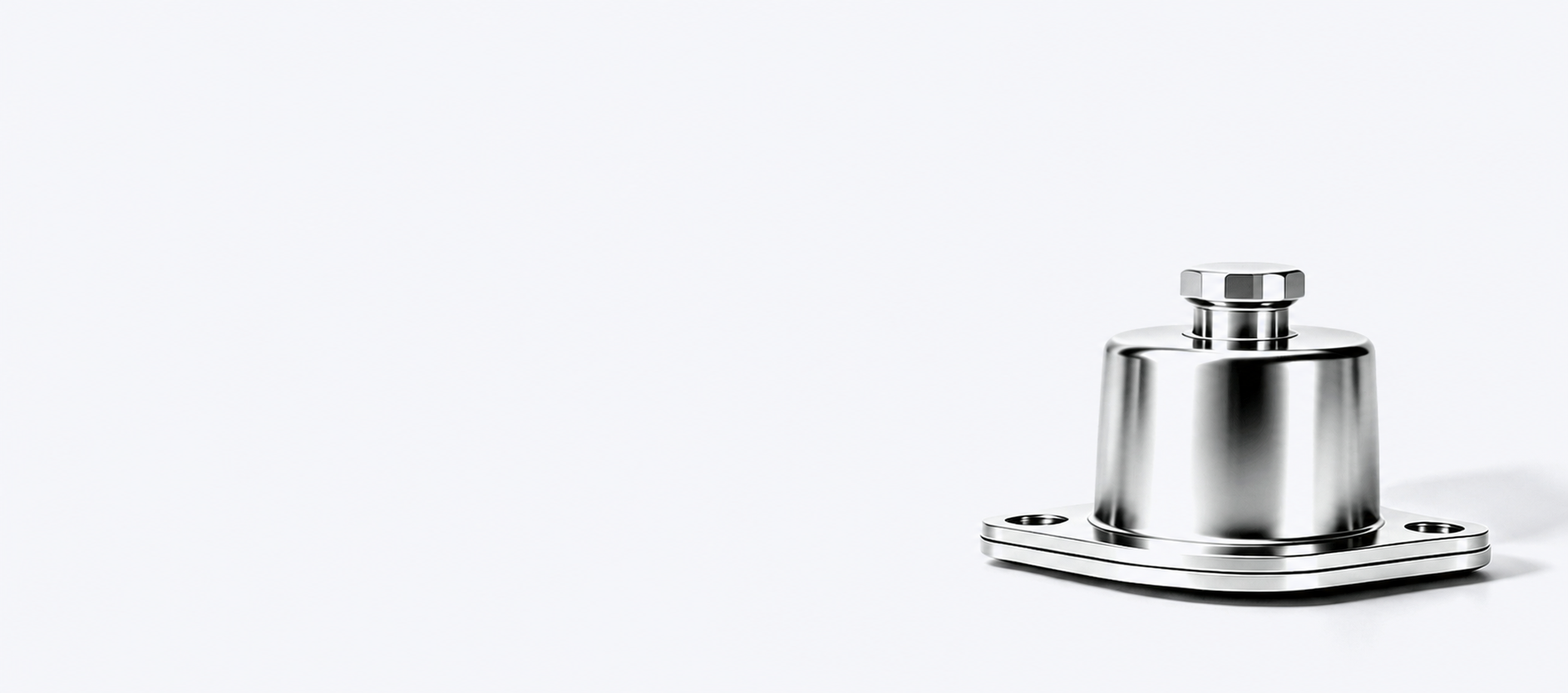
Adaptive Vibration Isolators for Avionics and Shipboard Electronics
Shock and Vibration Interface Hardware for Sensitive Defense Electronics
Perseus vibration isolators protect sensitive electronics from platform shock, random vibration, and resonance amplification. Available approaches include adaptive metal dampers, friction damping, high-damping silicone mounts, and integrated module isolation assemblies, with load cases reviewed from 0.05 kg up to 200 kg per unit by configuration.
Shock and Vibration Interface Hardware for Sensitive Defense Electronics
Perseus vibration isolators protect sensitive electronics from platform shock, random vibration, and resonance amplification. Available approaches include adaptive metal dampers, friction damping, high-damping silicone mounts, and integrated module isolation assemblies, with load cases reviewed from 0.05 kg up to 200 kg per unit by configuration.
Core Technical Features
Adaptive Damping Architectures:
Adaptive metal and friction damping concepts help manage resonance zones while preserving isolation behavior outside resonance.
High-Damping Silicone Mounts:
Elastomeric isolators support compact chassis and lightweight payloads where broadband attenuation and weathering resistance matter.
Integrated Module Isolation:
Structural isolation assemblies can combine chassis mounting and vibration protection where SWaP efficiency is important.
Environmental Durability Review:
Salt fog, humidity, ozone, and thermal cycling requirements should be confirmed by platform exposure and test plan.
Typical Applications
-
![Airborne Avionics and Sensor Payloads]()
Protects mission computers, sensor modules, and avionics racks from vibration-driven connector and PCB fatigue.
Airborne Avionics and Sensor Payloads
-
![Shipboard Radar and Communication Electronics]()
Supports equipment isolation where continuous low-frequency vibration and salt-laden environments affect hardware life.
Shipboard Radar and Communication Electronics
-
![Ground Mobile Electronics]()
Reduces shock and vibration transmission into vehicle-mounted electronics and tactical shelter systems.
Ground Mobile Electronics
-
![Compact Payload and Guidance Modules]()
Integrated isolation concepts support space-constrained airborne, missile, and mobile payload electronics.
Compact Payload and Guidance Modules


Series Selection Guide
Vibration Isolator Selection Guide
| Parameter | Available Configuration | Engineering Notes |
|---|---|---|
| Isolator Types | Adaptive metal dampers / friction damping / silicone mounts | Select by platform vibration profile and payload sensitivity. |
| Load Capacity | 0.05 kg to 200 kg per unit by configuration | Confirm load per isolator, center of gravity, and safety factor. |
| Operating Temperature | -55°C to +85°C by configuration | Final range depends on material system and exposure profile. |
| Durability Review | Salt fog / humidity / ozone / thermal cycling | Exposure requirements should be mapped to platform environment. |
| Qualification Planning | Defense-grade shock and random vibration profiles | Method, category, curve, and acceptance criteria belong in the program test plan. |
| Integration Data | Mounting envelope / static load / vibration input / target natural frequency | Required before isolator selection or custom review. |
Vibration Isolators for Military Fan Installations
Perseus vibration isolators are engineered to decouple cooling fan vibration from sensitive electronics payloads in avionics, radar, and precision military equipment. These isolators attenuate structure-borne vibration transmission while maintaining proper fan alignment and airflow path integrity under the environmental conditions defined by MIL-STD-810H.
Isolator selections are matched to fan weight, operating speed range, and the vibration profiles of the host platform (fixed-wing, rotary-wing, tracked vehicle, or shipboard). Elastomer compounds are formulated for operation from -55°C to +85°C with resistance to aviation oils, hydraulic fluids, and cleaning solvents. Proper isolation reduces both fan-induced vibration reaching sensitive electronics and external vibration reaching the fan bearings.
Vibration isolators should be selected based on the natural frequency requirement: typically isolator natural frequency should be less than half the lowest disturbing frequency for effective isolation. Fan weight, center of gravity location, and expected shock loads all influence isolator stiffness and placement.
Isolators must be installed with proper clearance to prevent short-circuiting vibration transmission through mounting hardware. All fasteners should use the specified shoulder bushings and washers to maintain isolation performance throughout the equipment service life.
Vibration Isolator Selection FAQ
Guidance for specifying isolator mounts on defense and aerospace electronics.
How do I pick the right isolator for my system weight?
Isolators are tuned around the system's natural frequency and the dominating vibration input. Match the mount's rated load range to the actual installed weight so it sits near its intended deflection, not at the edges.
Do I need locking strips or card retainers too?
Vibration isolators protect the chassis from external shocks, while wedge locks and card retainers prevent inserted boards from resonating under vibration. Rugged systems often need both working together.
Engineering Resources
Technical guides to support your fan selection and system integration.
How to Read P-Q Curves for Military Fan Selection
Understand static pressure, airflow operating points, and system impedance for defense cooling applications.
Military Cooling Fan Selection Guide
Selection criteria for military cooling fans including environmental standards and qualification requirements.
28VDC Avionics Cooling Fan Evaluation
Evaluation framework for 28VDC avionics fans covering startup current, airflow, and EMI considerations.
Technical Insights
Engineering insights on thermal management, fan selection, and defense electronics cooling.