


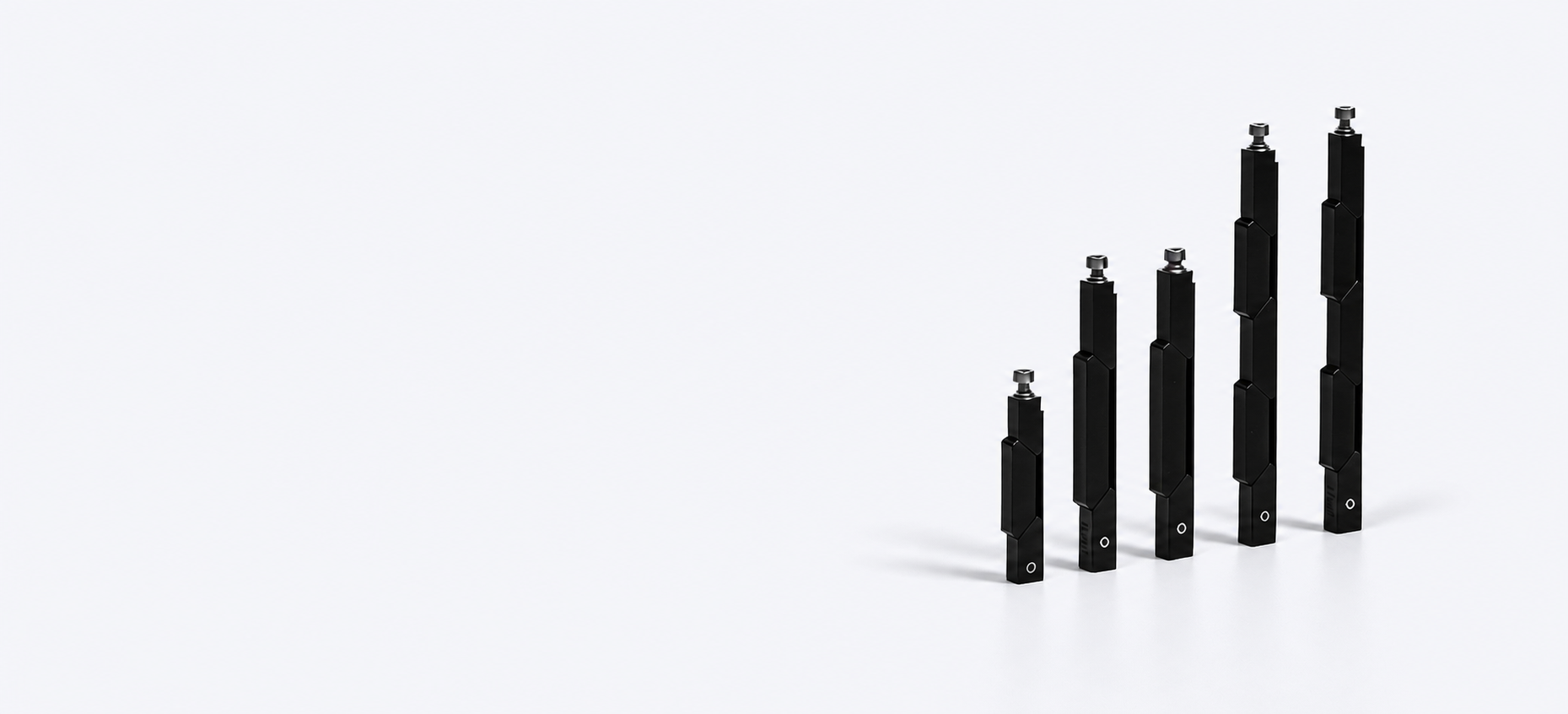
VPX/CPCI Card Pullers and Extraction Handles
Controlled Module Insertion and Extraction for Rugged Electronics Chassis
Perseus card pullers and extractor handles provide controlled mechanical leverage for plug-in modules in VPX, CPCI, ASAAC, SEM, VITA 48, and custom chassis formats. Available configurations include standard, heavy-duty, compact, and custom series with aerospace aluminum, stainless steel, and titanium material options by program requirement.
Controlled Module Insertion and Extraction for Rugged Electronics Chassis
Perseus card pullers and extractor handles provide controlled mechanical leverage for plug-in modules in VPX, CPCI, ASAAC, SEM, VITA 48, and custom chassis formats. Available configurations include standard, heavy-duty, compact, and custom series with aerospace aluminum, stainless steel, and titanium material options by program requirement.
Core Technical Features
Controlled Extraction Leverage:
Extractor handles help technicians insert or remove high-pin-count modules without loading connectors or PCB structures unevenly.
Module Format Compatibility:
Configuration options support 3U/6U VPX, CPCI, ASAAC, SEM, VITA 48, single-wide, double-wide, and custom module formats.
Material and Finish Options:
Aerospace aluminum, stainless steel, and titanium options can be paired with anodize or passivation for environmental resistance.
Safety and Retention Details:
Integrated locking mechanisms and extraction limit stops can be reviewed where accidental release or over-travel must be controlled.
Typical Applications
-
![VPX and ASAAC Module Chassis]()
Supports controlled extraction for dense avionics modules and VITA 48 chassis assemblies.
VPX and ASAAC Module Chassis
-
![Shipboard Processing Modules]()
Provides extraction leverage for signal-processing and power modules in naval electronics cabinets.
Shipboard Processing Modules
-
![Ground Mobile Command Systems]()
Supports field-replaceable modules in tactical shelters and vehicle-mounted electronics.
Ground Mobile Command Systems
-
![Test and Calibration Equipment]()
Enables repeated module insertion and removal in laboratory, production, and field test racks.
Test and Calibration Equipment


Series Selection Guide
Card Puller Selection Guide
| Parameter | Available Configuration | Engineering Notes |
|---|---|---|
| Compatibility | 3U/6U VPX / CPCI / ASAAC / SEM / VITA 48 | Confirm connector insertion force and front-panel geometry. |
| Module Formats | Single-wide / double-wide / custom | Handle geometry should match module pitch and neighboring clearance. |
| Series Options | Standard / heavy-duty / compact / custom | Select by module mass, extraction resistance, and available front-panel area. |
| Materials | Aerospace aluminum / stainless steel / titanium options | Material selection balances mass, strength, corrosion, and program requirements. |
| Surface Finish | Anodize / passivation | Finish should match environmental exposure and mating hardware. |
| Safety Features | Locking mechanisms / extraction limit stops | Use where accidental release or over-travel must be controlled. |
Fan Pullers for Safe Removal of Press-Fit Cooling Fans
Perseus fan pullers are purpose-built tools for safe, damage-free removal of press-fit and tight-tolerance cooling fans from heat sinks, cold plates, and chassis mounting bores in military and aerospace electronics. These tools distribute extraction force evenly around the fan frame to prevent bending, cracking, or damage to fan components, mounting surfaces, or adjacent electronics during maintenance.
Puller designs are available for common fan frame sizes from 40mm through 120mm, with jaw configurations that engage the fan frame mounting flange without contacting the fan blades, motor housing, or electrical connector. Tool materials and heat treatment are selected for durability in depot and field maintenance environments, with operating temperature ratings appropriate for standard maintenance conditions.
Engineering answer: Always use the specified puller size matched to the fan frame diameter. Using an incorrectly sized puller or improvised tools can concentrate force on a small section of the frame, leading to fan damage, heat sink fin deformation, or damage to the mounting bore that compromises future installation fit.
Engineering answer: Apply extraction force evenly and progressively using the puller's center screw mechanism. If the fan does not move with reasonable force, stop and verify that all locking devices, retention hardware, and electrical connectors have been fully disengaged before continuing.
Engineering Resources
Technical guides to support your fan selection and system integration.
How to Read P-Q Curves for Military Fan Selection
Understand static pressure, airflow operating points, and system impedance for defense cooling applications.
Military Cooling Fan Selection Guide
Selection criteria for military cooling fans including environmental standards and qualification requirements.
28VDC Avionics Cooling Fan Evaluation
Evaluation framework for 28VDC avionics fans covering startup current, airflow, and EMI considerations.
Technical Insights
Engineering insights on thermal management, fan selection, and defense electronics cooling.