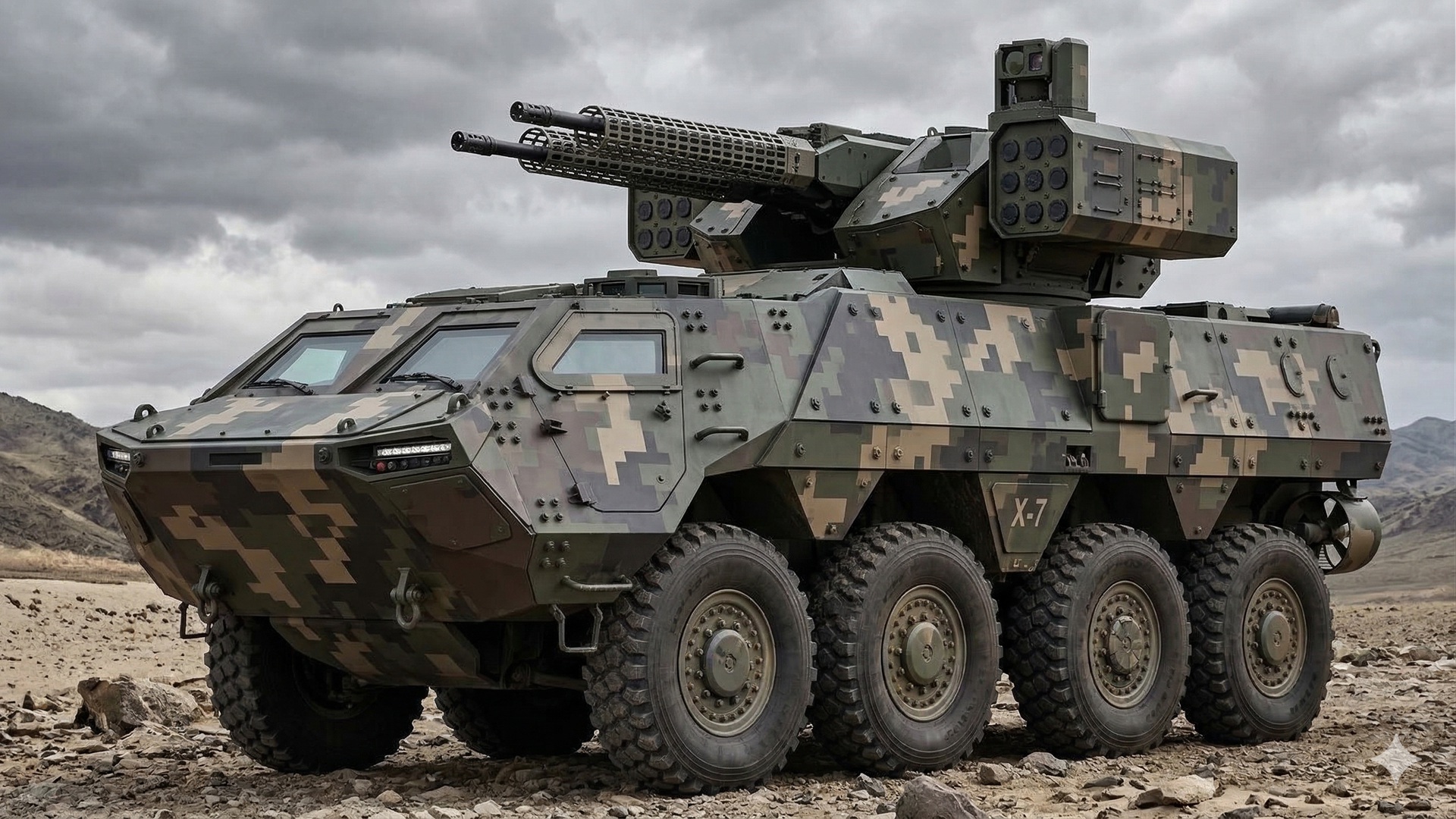





Rugged Cooling for Armored & Combat Vehicles

Engineered for Ballistic Shock, Extreme Terrain, and Mission-Critical Thermal Endurance

Armored Vehicles | MBT Cooling | MRAP | C4ISR Thermal Management | IP68 | MIL-STD-810 | VPX Chassis | NBC Filtration | Combat Electronics | Vibration Isolation

Solution Overview

Modern armored and combat vehicles—from Main Battle Tanks (MBTs) to Mine-Resistant Ambush Protected (MRAP) platforms—demand thermal management systems that perform without compromise under the most brutal operating conditions on earth. C4ISR electronics, targeting systems, and fire control computers generate concentrated heat loads in sealed, space-constrained compartments, while the vehicle itself subjects every component to relentless shock, vibration, sand ingress, and temperature extremes.

Perseus engineers heavy-duty cooling solutions and integrated chassis systems validated for the full spectrum of ground combat environments. From -55°C arctic deployments to +70°C desert operations, our systems deliver consistent thermal performance across tracked and wheeled platforms—without external infrastructure, without failure.

Application Scenarios

  • C4ISR & Battlefield Management

    Sustained thermal management for ruggedized servers in sealed ATR/VPX racks, maintaining signal integrity across all operational tempos.
  • Targeting & Fire Control

    Vibration-isolated cooling for thermal imaging processors and ballistic computers, ensuring precision targeting under tracked-vehicle shock profiles.
  • Active Protection Systems (APS)

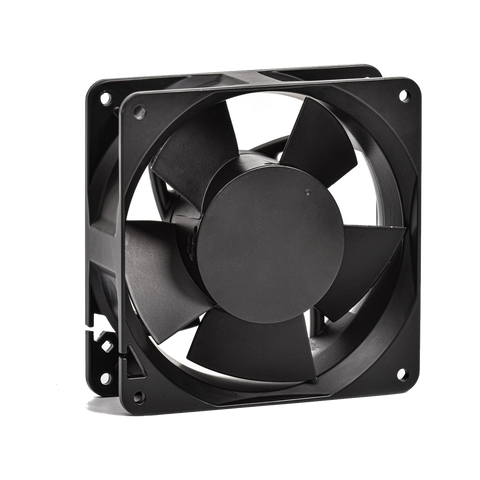
    High-reliability fan modules deliver uninterrupted airflow to APS radar electronics, regardless of terrain, orientation, or ambient temperature.
  • NBC / CBRN Filtration & ECS

    IP68-sealed blowers maintain crew compartment overpressure and filtration integrity through full submersion and decontamination wash-down.
  • Engine Bay & APU Cooling

    Heavy-duty forced-convection airflow for engine bay subsystems and Auxiliary Power Units in extreme high-temperature operating environments.
  • VPX / ATR Rack Thermal Management

    Customized 3U/6U VPX chassis with integrated high-pressure axial fans, supporting total heat dissipation up to 2000W per enclosure.
  • Power Electronics & Inverter Cooling

    Robust airflow management for onboard power conversion modules and inverters, preventing thermal runaway in high-density power electronics.
  • Engine Scavenge & Smoke Extraction

    Rapid extraction of engine exhaust gases and turret firing smoke, preventing toxic accumulation in sealed crew compartments.
  • Crew Ventilation & Thermal Comfort

    Forced ventilation and temperature-controlled airflow sustaining crew operational effectiveness across desert-to-arctic temperature extremes.

Core Challenges

  • Ballistic Shock & Continuous Tracked-Vehicle Vibration:Tracked vehicles generate intense, continuous low-frequency vibration, while weapons fire and ballistic events produce extreme transient shock pulses exceeding 40G. Standard commercial cooling hardware fails rapidly under these combined mechanical loads, causing bearing failure, connector fatigue, and structural fracture.
  • Sand, Dust & Fluid Ingress:Combat vehicles operate through sandstorms, river fording, and high-pressure decontamination cycles. Particulate contamination and fluid intrusion destroy unprotected motor windings and bearings—causing catastrophic cooling failure at the worst possible moment.
  • Extreme Thermal Range — Desert to Arctic:Ground combat platforms must operate across a temperature envelope from -55°C arctic conditions to +70°C desert heat, often within the same deployment. Thermal management systems must deliver consistent performance across this full range without reconfiguration or external support.
  • Unstable Vehicle Power Bus:Military vehicle power buses frequently experience severe voltage spikes, brownouts, and polarity reversals caused by weapons systems, starter loads, and battle damage. Unprotected electronics fail unpredictably under these conditions, compromising mission-critical systems at critical moments.
  • SWaP & Integration Constraints:Combat vehicle platforms impose strict Size, Weight, and Power (SWaP) budgets alongside complex mechanical integration requirements. Cooling solutions must conform to existing vehicle architectures—including VPX, ATR, and custom form factors—without adding excessive weight or consuming scarce electrical power.

How we solve it

1. IP68 Ingress Defense — Total Environmental Sealing:
Sand, dust, mud, and decontamination fluids destroy unprotected cooling systems in combat environments. Our fully encapsulated motor windings with heavy conformal coating and IP67/IP68-rated bearing seal technologies eliminate ingress at every failure point—delivering zero motor failures from particulate contamination or fluid intrusion, validated through full submersion testing.

2. Ballistic Shock & Vibration Isolation:
Tracked vehicle vibration and ballistic shock pulses exceeding 40G cause bearing failure and structural fatigue that standard hardware cannot survive. Our die-cast aluminum/magnesium-alloy housings with dynamically balanced rotating assemblies and GMZ/GMX adaptive damping isolators absorb both continuous vibration and transient shock—validated to MIL-STD-810 tracked vehicle and ballistic shock profiles with significant reduction in fatigue-related failure rates.

3. Intelligent Power Resilience:
Vehicle power buses experience voltage spikes, brownouts, and polarity reversals during combat operations that cause unpredictable cooling failure at critical moments. Our built-in over/under-voltage and reverse-polarity protection circuits, combined with QHFC-series closed-loop speed regulation, maintain stable fan RPM and consistent airflow regardless of bus conditions—with CAN/RS485 integration for vehicle health management systems.

4. SWaP-Optimized Structural Integration:
Combat platforms impose strict Size, Weight, and Power budgets that conventional cooling solutions cannot meet without compromise. Our lightweight magnesium-aluminum alloy chassis and integrated VPX/ATR enclosure designs combine forced-air convection with conduction pathways to maximize thermal performance within platform constraints—requiring no external infrastructure in the field.

Cooling MethodHeat Flux CapacityWeight PenaltyIngress RiskBest For
Air-Cooled (Forced Convection)Up to 180W per moduleLowLow (IP68 sealed)C4ISR racks, VPX chassis, command consoles
Liquid-Cooled (Flow-Through)Up to 500 W/cm²MediumNoneHigh-power targeting processors, APU cooling
Conduction-CooledUp to 100 W/cm²Medium-HighNoneSealed APS electronics, space-constrained pods

Frequently AskedQuestions (FAQ)

  • What shock and vibration data matters for ground vehicle and shipboard cooling?
    A: The useful vibration question is not only whether a fan has passed a generic test, but whether the test matches the platform spectrum. Ground vehicles may require tracked or wheeled-vehicle profiles under MIL-STD-810H Method 514.8, while shipboard systems often require sinusoidal vibration and shock review against the naval test plan. Provide mounting orientation, RMS level, frequency range, dwell requirements, and whether the fan is mounted directly to a panel, an electronics rack, or an isolator. 
  • What environmental protection should I specify for salt fog, rain, dust, and humidity?
    A: Environmental qualification can be planned against MIL-STD-810H. Program-specific conditions may include high and low temperature from -55°C to +85°C, temperature shock, humidity, salt fog per Method 509.7, fungus resistance, sand and dust ingress, rain, and immersion where applicable. IP67 and IP68 rated variants are available for applications requiring water ingress protection, with final exposure duration and acceptance criteria defined by the platform test plan. 
  • How should I size power supply margin for startup current and bus transients?
    A: Power sizing should include nominal voltage, continuous current, startup current, and the platform transient profile. BLDC fans often draw 1.5 to 3 times rated current for a short startup interval. Aircraft and vehicle platforms may also impose surge, brownout, reverse polarity, or load-dump requirements. For 28VDC equipment, review the invoked MIL-STD-704 or MIL-STD-1275 profile. For 400Hz AC equipment, verify line/phase voltage, frequency tolerance, inrush behavior, and dielectric withstand requirements. 
  • Why does airflow drop after long operation in dusty, humid, or high-temperature equipment?
    A: Long-term airflow loss usually comes from one of four causes: inlet or outlet blockage, voltage drop at the fan terminals, incorrect PWM command, or mechanical degradation. Dust and process residue increase system impedance, humidity and salt can raise connector resistance, and high temperature accelerates lubricant and bearing wear. Troubleshooting should record terminal voltage, current draw, PWM duty cycle, FG speed, inlet condition, outlet condition, and any abnormal bearing noise before replacing the fan. 
  • How do I estimate required airflow from heat load before pressure drop is known?
    A: Start with heat load, allowable temperature rise, and air properties. A practical first-pass estimate is airflow equals heat load divided by air density, specific heat, and allowed temperature rise. Using 1.225 kg/m3 air density and 1,004 J/kg-K specific heat, a 400 W load with a 10°C rise needs about 117 m3/h before pressure-loss margin. If the enclosure pressure drop is unknown, select an initial fan target around 1.3 to 2.0 times the calculated airflow, then verify the operating point with P-Q data.