


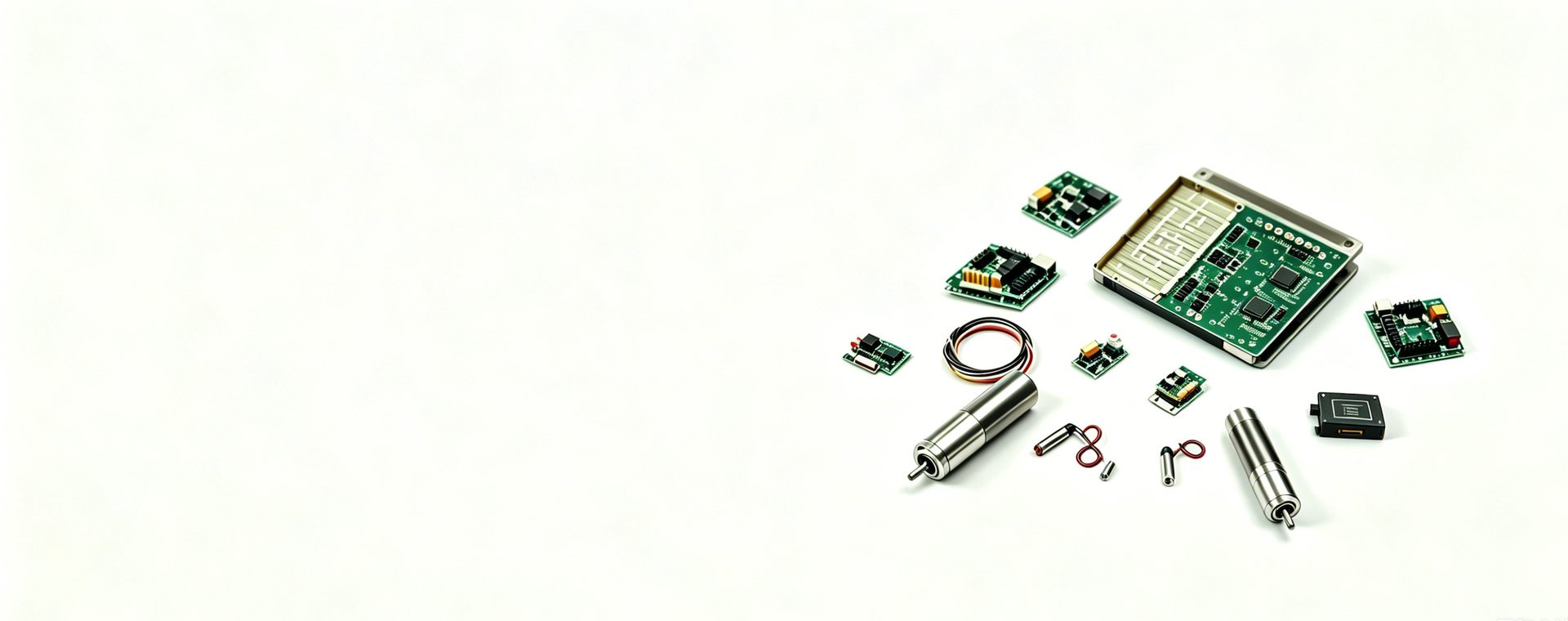
Military-Grade Intelligent Fan Drives for Defense Thermal Management
Closed-Loop PWM Regulation, Multi-Protocol Telemetry, and Fail-Safe Fan Control
Perseus intelligent fan drives coordinate PWM speed control, telemetry, and fault behavior for rugged cooling assemblies. Designed around Perseus fans, these architectures support temperature-driven control, host-commanded profiles, multi-zone feedback, and fail-safe cooling states for avionics, radar, naval, and ground electronics.
Closed-Loop PWM Regulation, Multi-Protocol Telemetry, and Fail-Safe Fan Control
Perseus intelligent fan drives coordinate PWM speed control, telemetry, and fault behavior for rugged cooling assemblies. Designed around Perseus fans, these architectures support temperature-driven control, host-commanded profiles, multi-zone feedback, and fail-safe cooling states for avionics, radar, naval, and ground electronics.
Core Technical Features
Closed-Loop Fan Speed Regulation:
Temperature-driven or host-commanded PWM control adjusts airflow to thermal load, reducing unnecessary full-speed runtime while preserving cooling margin.
Native Perseus Fan Compatibility:
Drive profiles align startup, PWM response, FG/RD feedback, rotor-lock reporting, and rated operating-point behavior with Perseus fan assemblies.
Multi-Protocol Integration:
RS232, RS485, CAN bus, Ethernet, and I2C options support enclosure controllers and platform health-monitoring systems.
Fail-Safe Cooling Behavior:
On communication loss or alarm conditions, the drive can default to a defined safe cooling state and report fan faults for maintenance review.
Typical Applications
-
![Avionics LRUs and Radar Processors]()
Controls fan speed in avionics boxes and radar processors where thermal margin, acoustic load, and power budget must be balanced.
Avionics LRUs and Radar Processors
-
![C4ISR Shelters and Ground Electronics]()
Coordinates multiple fan zones in rugged shelters and vehicle electronics with fault telemetry for maintenance review.
C4ISR Shelters and Ground Electronics
-
![Shipboard and Naval Electronics]()
Supports continuous cooling in naval cabinets where EMC-aware integration and stable fan behavior matter near communications equipment.
Shipboard and Naval Electronics
-
![Form-Fit-Function Cooling Retrofits]()
Preserves voltage, airflow, alarm logic, and control behavior when obsolete cooling assemblies are replaced.
Form-Fit-Function Cooling Retrofits


Series Selection Guide
Multi-Channel Fan Drives
| Feature | Specification | Engineering Notes |
|---|---|---|
| Fan Capacity | Up to 8 fans | Multi-zone cooling control |
| Primary Interfaces | RS232 / RS485 / CAN bus | Host control and fault reporting |
| Control Modes | PWM speed control | Temperature-driven, host-commanded, or fixed profile |
| Diagnostics | Rotor-lock fault reporting | Fan health status by configuration |
| Qualification Planning | MIL-STD-810H / MIL-STD-461G references | Final limits by platform plan |
Network-Enabled Fan Drives
| Feature | Specification | Engineering Notes |
|---|---|---|
| Fan Capacity | Up to 6 fans | Distributed thermal-zone control |
| Primary Interfaces | Ethernet / I2C / CAN / RS485 | Enclosure or platform controller integration |
| Sensor Inputs | Up to 4 thermistor channels | Multi-zone thermal mapping |
| Telemetry | Current / voltage / temperature / fault status | Maintenance and health review |
| Use Case | C4ISR, naval electronics, radar processors | Networked thermal-management systems |
Compact and Integrated Smart Fan Drives
| Feature | Specification | Engineering Notes |
|---|---|---|
| Fan Capacity | 1-3 fans | Space-constrained LRUs |
| Input Voltage | 9-36 VDC | Source range from existing documentation |
| Quiescent Power | <0.5 W | Standby or low-load thermal states |
| Control Options | NTC / manual override / RS485 | Thermostatic, manual, or remote-control variants |
| Smart Assembly Modes | 3-speed / 0-100% proportional / temperature-driven | Sealed plug-and-play modules by configuration |
BLDC Motors & Fan Drives for Aerospace Motion Control
Perseus BLDC motors and electronic fan drives provide high-reliability motion control and motor drive solutions optimized for aerospace and defense applications. These drive electronics and motor assemblies are designed for fan speed control, valve actuation, pump drives, and other precision motion requirements in avionics, UAV systems, ground vehicles, and shipboard equipment where reliability under harsh environmental conditions is essential.
Motor and drive configurations support wide temperature operation from -55°C to +85°C with MIL-STD-810H qualification planning for shock, vibration, humidity, and altitude. Drive electronics include options for PWM speed control, tachometer feedback (FG), locked-rotor detection (RD), current limiting, and EMI filtering compatible with military power quality standards (MIL-STD-704, MIL-STD-1275). Custom winding configurations and mechanical interfaces can be developed for specific application requirements.
Engineering answer: Motor and drive selections should consider continuous and peak torque requirements, operating speed range, supply voltage range, thermal dissipation from the drive electronics, and required control interface (analog, PWM, or digital communication). Derating factors should be applied for high-temperature and high-altitude operation.
Engineering answer: EMI filtering and conducted emissions should be reviewed during system integration, particularly for sensitive avionics and receiver applications. Proper grounding, supply decoupling, and cable routing practices are essential to meeting MIL-STD-461 emission requirements in the final equipment configuration.
Engineering Resources
Technical guides to support your fan selection and system integration.
How to Read P-Q Curves for Military Fan Selection
Understand static pressure, airflow operating points, and system impedance for defense cooling applications.
Military Cooling Fan Selection Guide
Selection criteria for military cooling fans including environmental standards and qualification requirements.
28VDC Avionics Cooling Fan Evaluation
Evaluation framework for 28VDC avionics fans covering startup current, airflow, and EMI considerations.
Technical Insights
Engineering insights on thermal management, fan selection, and defense electronics cooling.