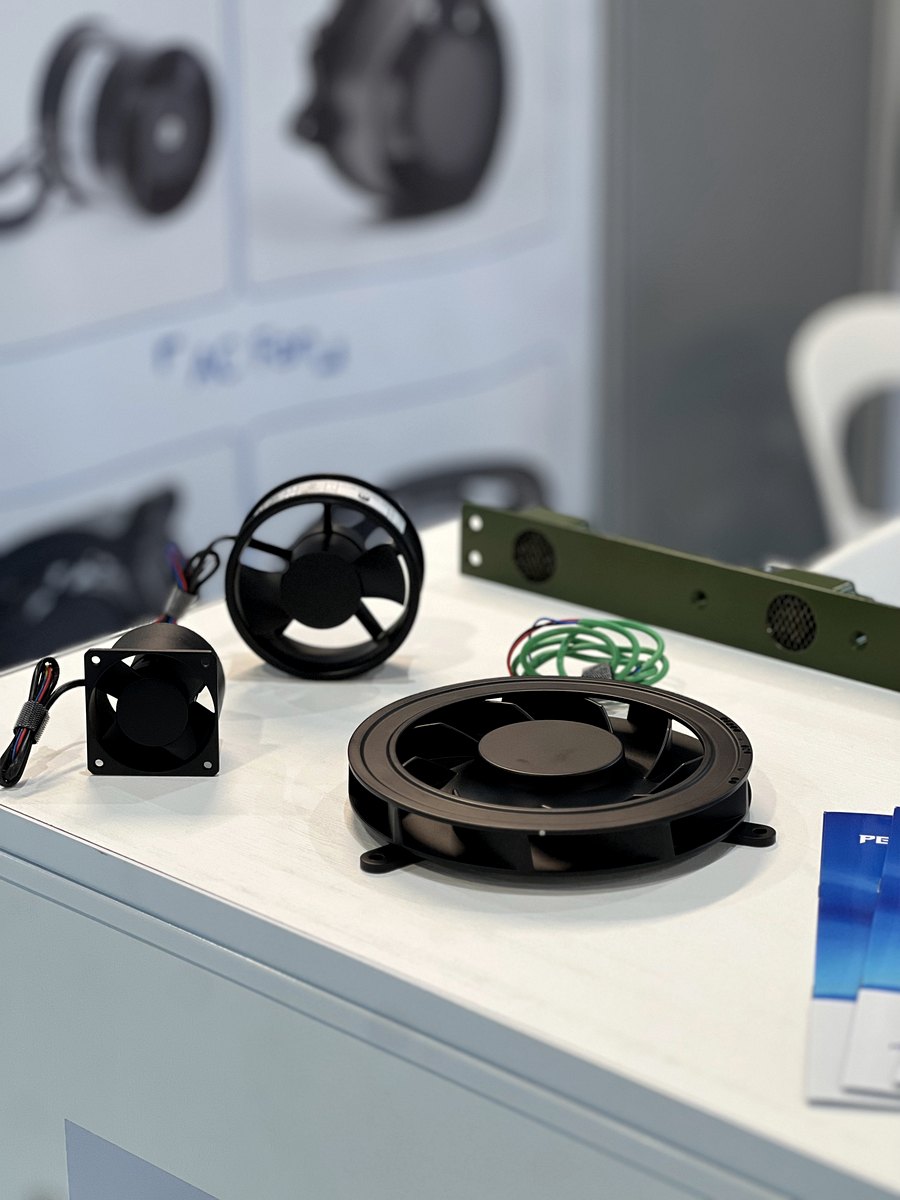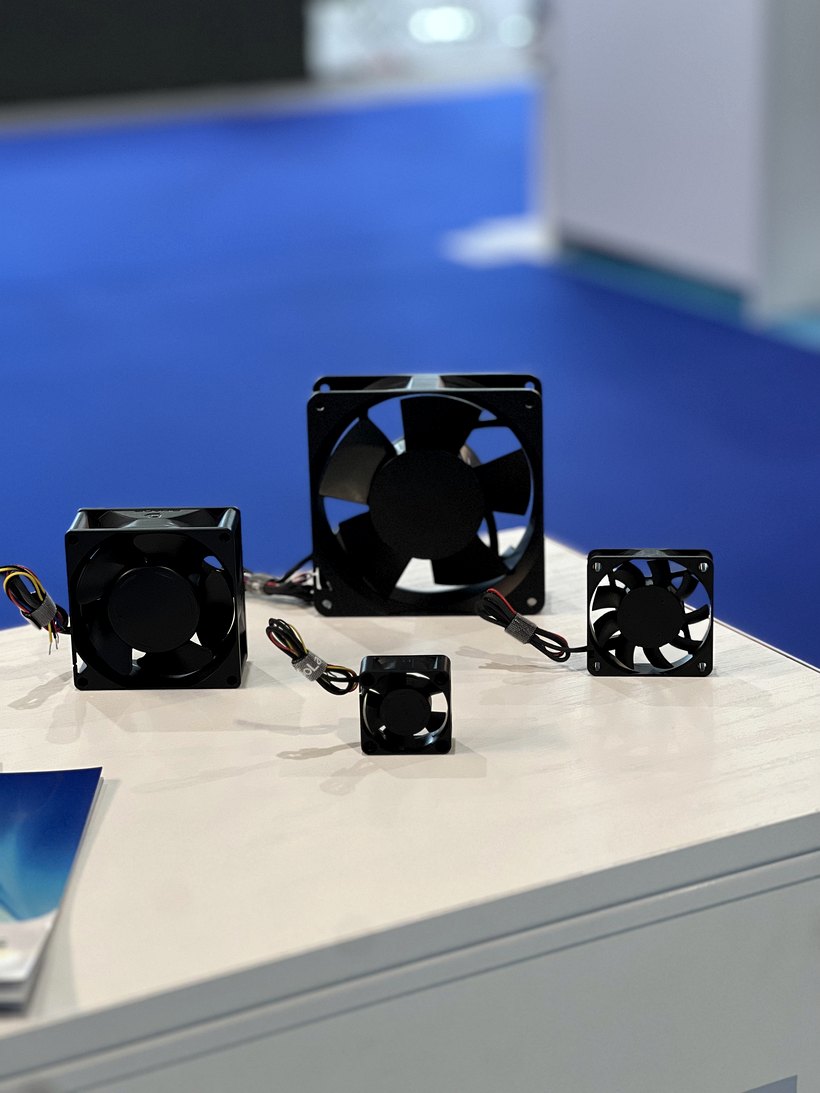

Airflow still matters, but the more serious conversations usually started one step later. Visitors wanted to understand what happens after a cooling fan is placed behind a filter, inside a compact electronics bay, or near other components that restrict the airflow path. In that situation, free-air CFM is only a starting point.
For defense electronics, the installed operating point is what matters. A fan that looks strong on paper can underperform if the enclosure resistance is higher than expected. That is why more teams are asking for pressure capability, airflow-path review, and some level of validation around the actual installation condition.
This is also where the difference between axial and centrifugal cooling becomes more practical than theoretical. Axial fans are still a good fit for many open airflow paths. Centrifugal fans become more relevant when the system needs to push air through a tighter route, a filter, or a compact duct. Engineers comparing centrifugal fans with axial options should look at the application first, not just the headline airflow number.