
Perseus Technical Editorial Team
Perseus technical content is reviewed for relevance to defense electronics cooling, rugged thermal management, and international qualification requirements before publication.




Airflow still matters, but the more serious conversations usually started one step later. Visitors wanted to understand what happens after a cooling fan is placed behind a filter, inside a compact electronics bay, or near other components that restrict the airflow path. In that situation, free-air CFM is only a starting point.
For defense electronics, the installed operating point is what matters. A fan that looks strong on paper can underperform if the enclosure resistance is higher than expected. That is why more teams are asking for pressure capability, airflow-path review, and some level of validation around the actual installation condition.
This is also where the difference between axial and centrifugal cooling becomes more practical than theoretical. Axial fans are still a good fit for many open airflow paths. Centrifugal fans become more relevant when the system needs to push air through a tighter route, a filter, or a compact duct. Engineers comparing centrifugal fans with axial options should look at the application first, not just the headline airflow number.
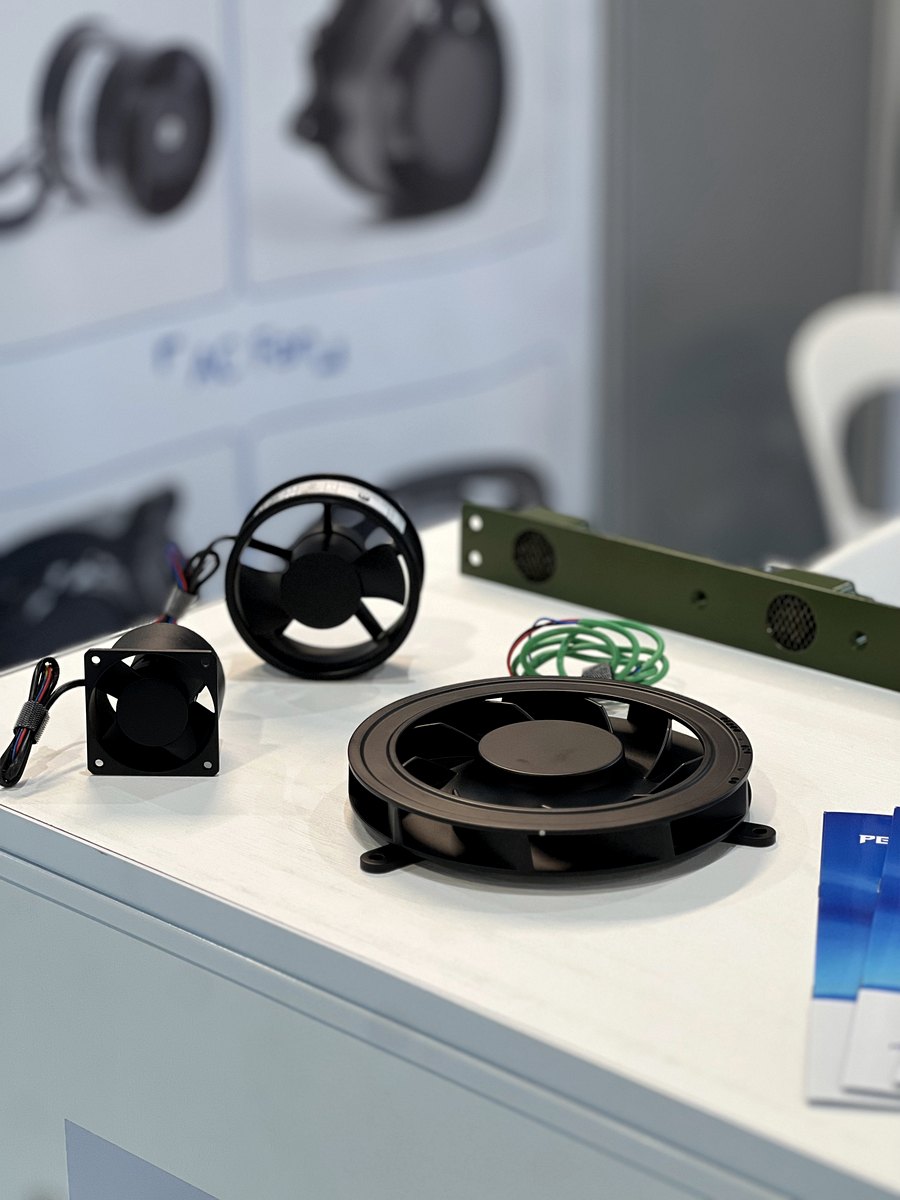
SWaP pressure is not new, but it keeps getting more visible. Smaller platforms, tighter electronics packaging, and higher onboard computing loads all leave less room for oversized cooling hardware. In practice, this means the cooling component has to earn its space inside the system.
Several recurring questions fit this pattern: Can the fan provide enough pressure without adding unnecessary power draw? Can the mounting interface be kept simple? Can the same supplier support a standard selection first and a modified design later if the envelope changes? These are not dramatic questions, but they are the kind that decide whether a component is easy to integrate or becomes a late-stage problem.
The takeaway is straightforward: cooling selection is moving closer to the system design stage. Teams are less willing to treat fans as replaceable accessories once the enclosure, wiring, maintenance access, and qualification plan are already defined.
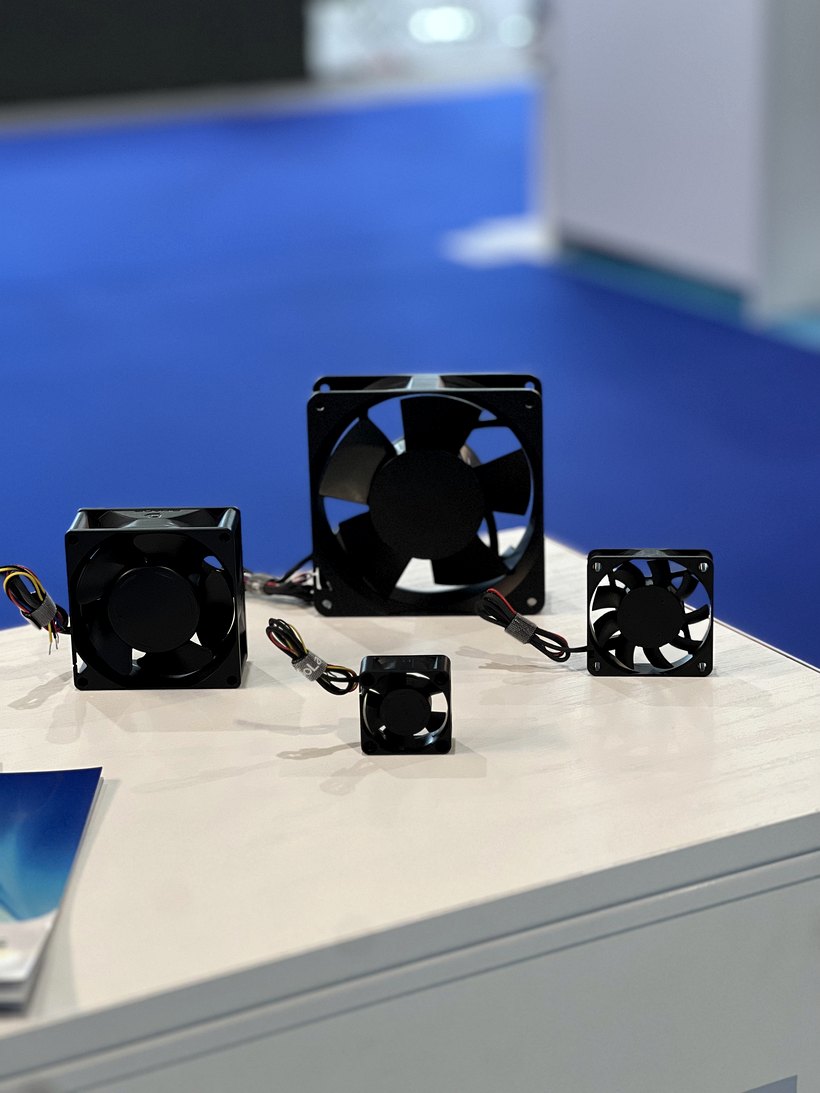
Reliability came up in practical terms: vibration, dust, temperature range, harness routing, connector access, and whether a unit can be replaced without creating unnecessary field-service work. For land systems especially, cooling hardware does not live in a clean laboratory environment. It sits in a vehicle, shelter, radar cabinet, or electronics bay where movement, contamination, and maintenance constraints are real.
A common failure path is simple. A system begins with acceptable airflow, then a filter loads with dust or the airflow path changes after installation. The fan still spins, but the electronics run hotter than expected. From the outside, it may not look like a fan problem at first. From a thermal design perspective, it is a system problem.
That is why airflow-pressure testing, environmental review, and practical mounting details should be discussed early. Perseus supports this kind of review through capabilities such as airflow-pressure testing and broader environmental and structural reliability evaluation.
Another clear theme was that cooling hardware is not only mechanical. In radar, communications, and electronic warfare environments, a fan or fan-drive assembly is also an electrical load. That means cable routing, grounding, filtering, and motor-drive behavior can matter during integration.
The point is not that every program needs the same EMC approach. The point is that cooling should not be treated as electrically neutral until the last stage of the project. If the review happens too late, teams may discover noise or grounding problems after the enclosure layout is already difficult to change.
For procurement teams, this changes the supplier conversation. The useful question is not only “Do you have a fan in this size?” It is also “Can you support the integration review around airflow, electrical interface, and reliability constraints?”
Eurosatory 2026 reinforced a practical message for defense electronics cooling: the best conversations start with the system, not the catalog. A product that performs well in isolation still has to work inside the real enclosure, under real constraints, with real maintenance expectations.
For teams reviewing cooling options after the show, the follow-up should be concrete:
Perseus will continue following up with contacts from Hall 5B, stand AB33. For teams working on land, air-land, radar, communications, or unmanned systems, the most useful next step is usually not a generic product request. It is a short technical review of the cooling constraint: heat load, voltage, airflow path, envelope, qualification assumptions, and expected service access. That is where a reliable cooling decision begins.
Perseus technical content is reviewed for relevance to defense electronics cooling, rugged thermal management, and international qualification requirements before publication.