RFQ Request a Quote
Home
Expand
Technical Resources
Expand
Technical Notes

Military Cooling Fan Environmental Qualification: MIL-STD-810H, IP67, Salt Fog and Rugged DC Fan Testing

August 19, 2026 Author:Dr. Du

Environmental Qualification: The 60-Second Review

Military cooling fan environmental qualification is not a single "MIL-STD-810H certified" label. A defensible specification identifies the selected fan model and configuration, the applicable method and procedure, test severity and duration, operating state, mounting arrangement, and pass/fail criteria.

This engineering guide explains how to specify temperature, low pressure, rain, humidity, fungus, salt fog, sand and dust, vibration, shock, and ingress protection for rugged cooling fans used in defense, aerospace, naval, ground-vehicle, radar, and other high-reliability electronics. Whether you are procuring a mil spec fan for an avionics bay, a military vehicle, or a shipboard cabinet, the same evidence rules apply — and the same logic carries over to an RTCA DO-160 fan in civil and military aviation programs.

Environment Common reference What the buyer must define Evidence to request
Low pressure / altitudeMIL-STD-810H Method 500.6Altitude, temperature, operating state, durationPressure profile, electrical data, speed and airflow results
High / low temperatureMethods 501.7 and 502.7Storage and operating limits, ramps, dwell, start requirementChamber log, start current, speed, functional checks
Rain / humidityMethods 506.6 and 507.6Procedure, exposure, orientation, powered or unpowered stateTest setup, cycle record, insulation and functional results
FungusMethod 508.8Materials, duration, growth and performance criteriaMaterial review and test report where required
Salt fogMethod 509.7Solution, exposure/dry cycles, orientation, corrosion criteriaSolution record, photographs, post-test functional results
Sand and dustMethod 510.7Particle type, concentration, velocity, temperature, operationChamber profile and pre/post airflow and current data
Vibration / shockMethods 514.8 and 516.8Platform spectrum or pulse, axes, duration, fixture, operationControl/response plots and pre/post functional results
Ingress protectionIEC 60529Required IP code and whether it applies to the component or enclosureModel-specific IP report and configuration definition

Start With Tailoring, Not a Generic Test Label

MIL-STD-810H Change 1 provides an environmental-tailoring process and laboratory test methods. It does not define one universal fan qualification level for every aircraft, vehicle, shipboard cabinet, or electronics enclosure. Two military grade fans may both be tested with the same method number while using different procedures, severities, mounting arrangements, and acceptance criteria.

A procurement specification should therefore avoid a bare statement such as "MIL-STD-810H compliant." The useful requirement is a traceable test matrix tied to the installed environment and the exact product configuration.

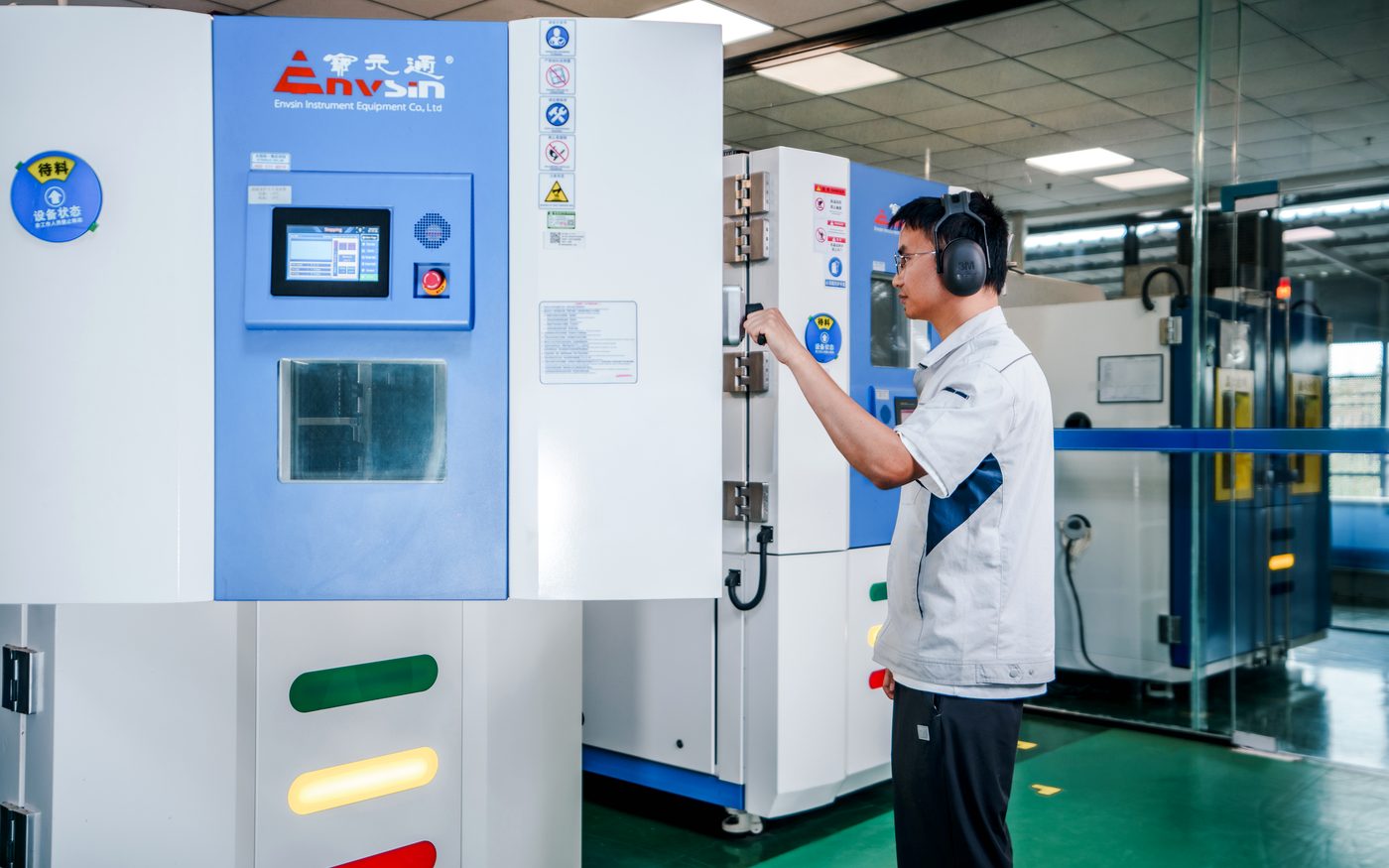
Perseus engineer operating a temperature and humidity chamber during cooling fan environmental testing
Representative Perseus environmental-chamber operation. Qualification limits are established for the selected model, configuration, and agreed test plan.

Temperature, Cold Start, and Low-Pressure Operation

For a wide temperature dc fan, a low-temperature claim should cover more than survival in a cold chamber. The engineering question is whether the selected unit can start, accelerate, regulate speed, and provide the required airflow after the specified soak. Bearing system, lubricant, motor torque, control electronics, cable materials, connector, and ice or condensation risk all affect the result.

Method 502.7 addresses low-temperature environments, while Method 501.7 addresses high temperature operation for high temperature dc fan applications. Where altitude is relevant, Method 500.6 should be considered separately because reduced air density changes both heat transfer and fan operating behavior — this is where a high altitude resistant fan rating must be demonstrated on the installed system resistance, not on free-air airflow alone.

Perseus low-temperature configurations integrate heaters and temperature sensors that keep the fan running stably below −55°C, with test exposure down to −85°C. But a heater does not automatically prove a −55°C operating rating: heater power, control threshold, warm-up time, supply capacity, and the complete cold-start sequence are validated for each model.

Rain, Humidity, Fungus, and IP Protection

Rain, humidity, fungus resistance, and ingress protection describe different risks. Method 506.6 evaluates rain exposure, Method 507.6 evaluates humidity, and Method 508.8 addresses fungus susceptibility. IEC 60529 classifies protection against access, dust, and water ingress using the IP code.

IP67 is not equivalent to salt-fog resistance, and it is not a portfolio-wide claim. For a waterproof dc fan, the required IP code - whether IP67, IP68, or a dust-tight variant - must be matched to the actual enclosure and interface configuration. An IP result applies to the tested component or enclosure configuration. Connector termination, cable exit, drain path, mounting interface, gasket compression, and production construction must match the tested arrangement.

Likewise, a dustproof dc fan claim should be tied to the tested interface and sealing arrangement, not to the product family name. If the procurement requirement is dust-tight operation, specify the IP code and the exact test condition.

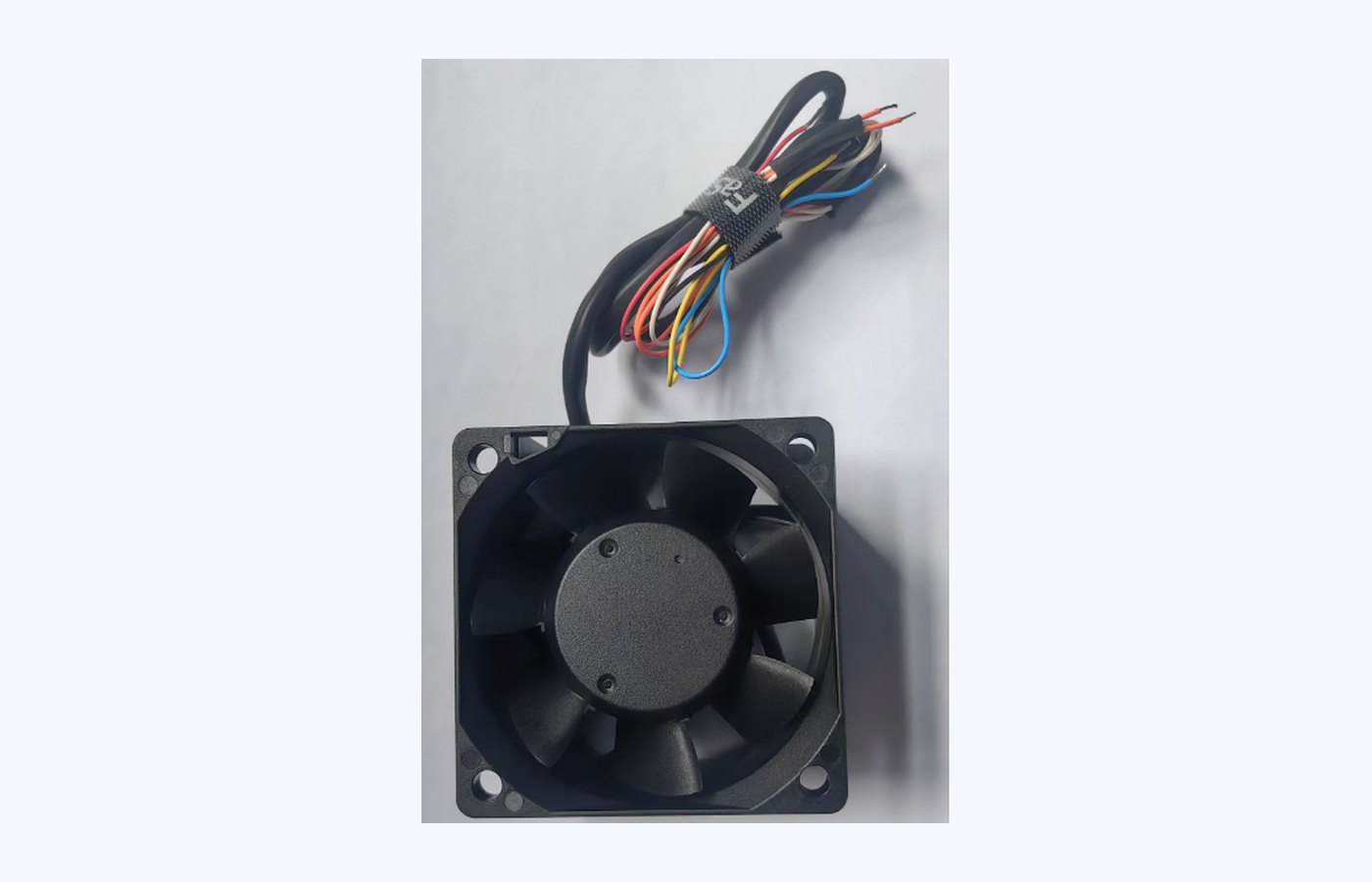
Sealed Perseus axial cooling fan used for harsh-environment electronic cooling applications
Representative sealed axial-fan construction. The applicable ingress-protection level must be confirmed for the selected model and interface configuration.

Salt Fog and Marine Exposure

Method 509.7 is used to evaluate the effectiveness of protective coatings and finishes in a salt-fog environment. The standard method uses a near-neutral salt solution unless the procurement specification defines a separately tailored condition. An acidified pH 3.5 exposure or a long-duration seawater-immersion program may be appropriate for a particular engineering study, but it must not be presented as the generic MIL-STD-810H salt-fog requirement.

Perseus marine programs run exactly this kind of tailored profile: acidified salt fog at pH 3.5 ± 0.5 with 48-hour exposure-and-drying cycles to 192–240 hours total, and — for deck-exposed electronics that face seawater splash and short-term immersion — a 1,000-hour seawater immersion test. For a fan or blower destined for naval electronics or marine exposure, corrosion review should include the frame, fasteners, rotor and stator interfaces, bearings, connector, cable exit, coatings, exposed conductors, and galvanic couples created by the installation. Post-test acceptance should include visual inspection and functional measurements such as current, speed, status output, noise, and airflow where the test plan requires them.

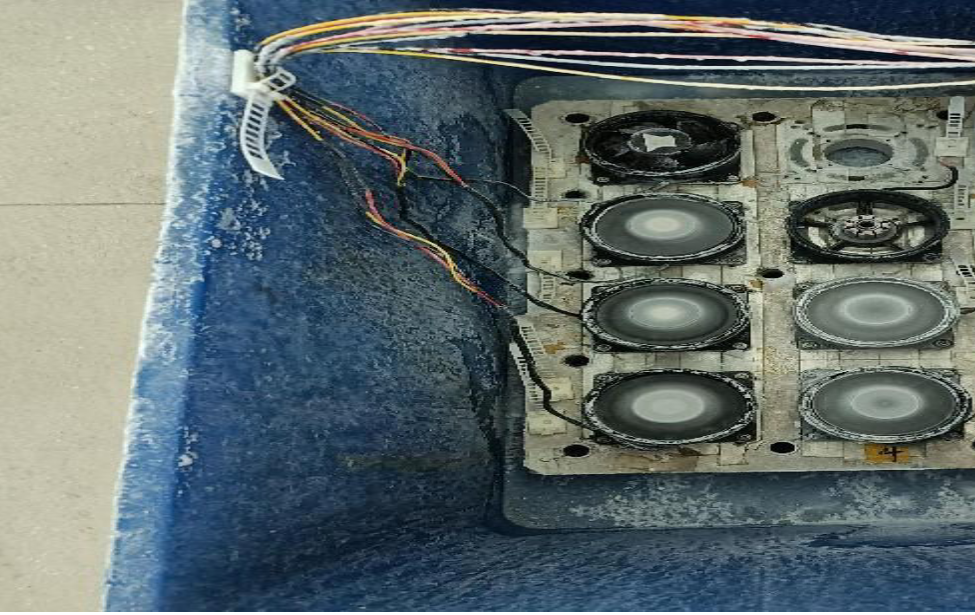
Perseus fan module after 1000-hour seawater immersion testing showing salt deposits on the assembly
Fan module after the 1,000-hour seawater-immersion program. Post-test review covers corrosion of the frame and fasteners, bearing condition, connector and cable-entry sealing, and functional measurements.

Sand and Dust

Method 510.7 separates blowing-dust and blowing-sand environments. For fans operating in desert theaters, a dustproof dc fan requirement should specify the exact test profile. A complete requirement identifies particle characteristics, concentration, air velocity, temperature, orientation, operating state, and duration. For an active fan, the test should also consider whether particles are pulled through the impeller and bearing area while the unit is operating.

Pass/fail criteria can include start and run performance, current, speed feedback, airflow or pressure performance, bearing noise, impeller clearance, insulation condition, and evidence of blocked passages or abrasive damage.

Vibration and Shock

Method 514.8 and Method 516.8 do not create one universal g-level for every military fan. The correct vibration spectrum or shock pulse depends on whether the unit serves as an avionics cooling fan, a military vehicle cooling fan, a UAV cooling fan, or a shipboard unit - and on platform location, mounting, equipment category, exposure duration, axes, and whether the fan operates during the event. The fixture must represent the intended interface closely enough to avoid a misleading result.

As a reference point from the severe end of the scale: Perseus shock and vibration resistant fan assemblies are qualified for a representative configuration on a fighter-platform random-vibration spectrum of 0.42 g²/Hz over a 15–1500 Hz band — about 25g rms for 10 hours per axis — and vibration-isolated fan modules extend this to 30g rms where the platform spectrum requires isolation. Isolation mounts reduce transmitted energy, but they also change system resonances and displacement; a fan tested on rigid mounts should not automatically be treated as qualified on isolators, or vice versa. Control and response accelerometers, mounting torque, fixture modes, and pre/post functional measurements should be documented.

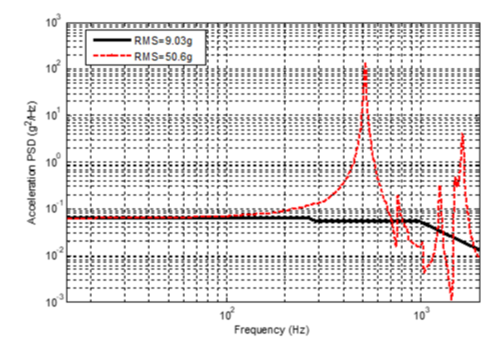
Vibration control and response PSD plots from cooling fan random vibration testing
Control and response PSD plots from a random-vibration test. The response spectrum (RMS 50.6 g) reveals a structural resonance near 550 Hz that the control spectrum (RMS 9.03 g) does not show — the reason response instrumentation matters.

What a Model-Specific Evidence Package Should Contain

  1. Configuration definition: model number, revision, voltage, connector and cable, control functions, coating or sealing options, and mounting hardware.

  2. Test definition: standard revision, method, procedure, severity, duration, axes, operating state, sample size, fixture, and instrumentation.

  3. Acceptance criteria: start and run behavior, current, speed, airflow or pressure, signal outputs, insulation, noise, visual condition, and allowable degradation.

  4. Traceable results: chamber or controller logs, photographs, control/response plots, pre/post measurements, deviations, and report revision.

Questions to Put in an RFQ

  • What are the operating and storage temperature limits, dwell times, ramp rates, and cold-start requirement?

  • What altitude or pressure, system impedance, airflow, and static-pressure margin apply at the worst operating point?

  • Which vibration spectrum, shock pulse, axes, fixture, and mounting hardware represent the installed platform?

  • Are rain, humidity, fungus, salt fog, sand/dust, or an IP code required, and what is the exact procedure and acceptance criterion?

  • Which voltage range, start-current limit, PWM input, FG/RD output, connector, EMI/EMC interface, and protection features are required?

  • If the requirement is a legacy replacement for a fan that must keep its original interface, what are the original part number, mounting footprint, and control interface — so the evidence package can be built for the replacement configuration?

  • Can the military cooling fan supplier share the model-specific environmental evidence package for the proposed configuration?

Frequently Asked Questions

Does MIL-STD-810H define one universal environmental rating for a cooling fan?

No. MIL-STD-810H is an environmental-tailoring framework. The method, procedure, severity, duration, operating state, mounting, and acceptance criteria must be selected for the intended platform and product configuration.

Is an IP67 fan automatically suitable for salt-fog exposure?

No. IP67 addresses dust and temporary water ingress under IEC 60529. Salt fog evaluates corrosion-related risks. Both may be required, but one does not replace the other.

Does adding a heater prove reliable operation at −55°C?

No. The complete configuration must demonstrate the specified soak, start, warm-up, speed, current, airflow, and functional behavior. Bearing, lubricant, motor, electronics, cable, connector, and control logic remain part of the qualification.

Can isolation mounts be added after vibration qualification?

Not without engineering review. Isolation mounts change resonance, transmitted acceleration, and displacement. Qualification evidence should represent the intended mounting interface.

Related Technical Notes

Conclusion

A credible military cooling fan qualification starts with the installed environment and ends with model-specific, traceable evidence. Method numbers alone are not enough. When the configuration, severity, operating state, mounting, and acceptance criteria are defined together, the result becomes useful for both technical selection and procurement review.

Perseus supports application-specific selection and environmental qualification planning for axial fans, centrifugal blowers, fan-drive electronics, retention hardware, and integrated thermal-management assemblies. As a military fan manufacturer, we build to the evidence package the platform requires — and for teams planning a legacy cooling fan replacement or form-fit-function cross-reference review, send us the original part number and mounting footprint, and we will review cross-reference options against our product line. Send the required airflow, static pressure, voltage and control interface, mechanical environment, temperature range, exposure profile, and evidence requirements for engineering review.

Technical basis: MIL-STD-810H Change 1 and IEC 60529. This guide explains specification practice and does not assign a universal qualification level to every Perseus product. Confirm all ratings against the selected model, configuration, datasheet, and approved test report. Reviewed August 2026.

Written By

Perseus product image

Dr. Du

Dr. Du is a thermal engineering designer at Perseus, specializing in forced-air cooling design and high-static-pressure DC fan selection for military and defense electronics. He leads airflow configuration and fan curve optimization reviews for rugged cooling applications.